

Pediatric Eye Care in Colorado Springs

Children’s eyes are still developing, and their vision needs differ significantly from adults. Clear, comfortable vision plays a vital role in learning, coordination, and confidence. Choosing a pediatric eye doctor in Northgate ensures your child receives care tailored specifically to their stage of visual development. Pediatric eye doctors are trained to identify subtle vision issues that may affect reading, attention, and academic performance—often before a child realizes there is a problem.
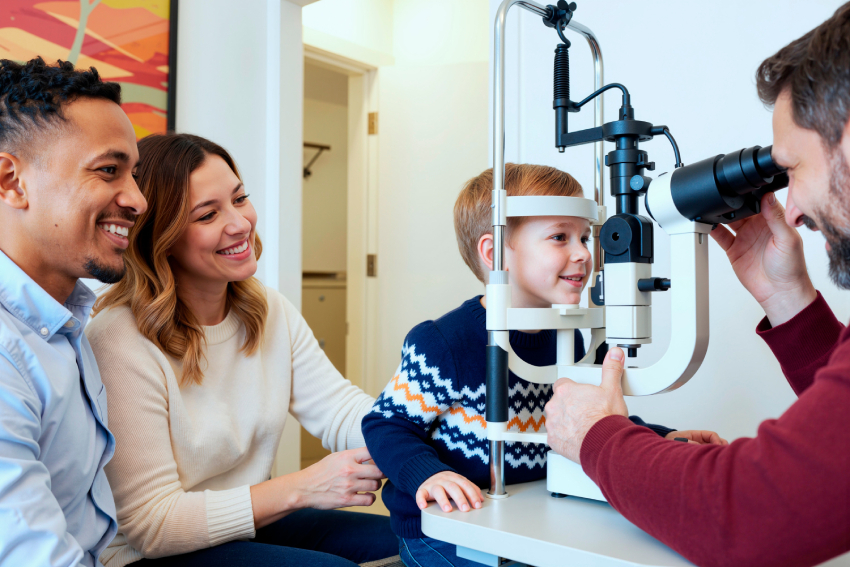
A young boy undergoes an eye exam with a doctor using a slit lamp while two adults, likely his parents, watch and smile.

Why pediatric eye care matters:

  • Early detection improves treatment outcomes

  • Developmental support for focusing, tracking, and eye teaming

  • Child-friendly care designed for comfort and cooperation

What Is Pediatric Eye Care?

Pediatric eye care focuses on detecting and managing vision problems that can interfere with learning and daily activities. Unlike basic screenings, comprehensive pediatric eye exams evaluate how clearly a child sees and how well their eyes work together.

A pediatric eye exam may include:

  • Visual acuity testing

  • Eye alignment and coordination checks

  • Eye movement and focusing assessments

These exams can detect conditions such as amblyopia (lazy eye) and strabismus (eye misalignment) early, when treatment is most effective.

When Should Children Have Eye Exams?

Recommended schedule:

  • 6 months old – early development screening

  • 3 years old – vision clarity and coordination

  • Before kindergarten – school readiness

  • Annually or as recommended thereafter

Children with glasses, myopia progression, or binocular vision concerns may need more frequent exams.

An optometrist fits eyeglasses on a smiling young girl during an eye examination.
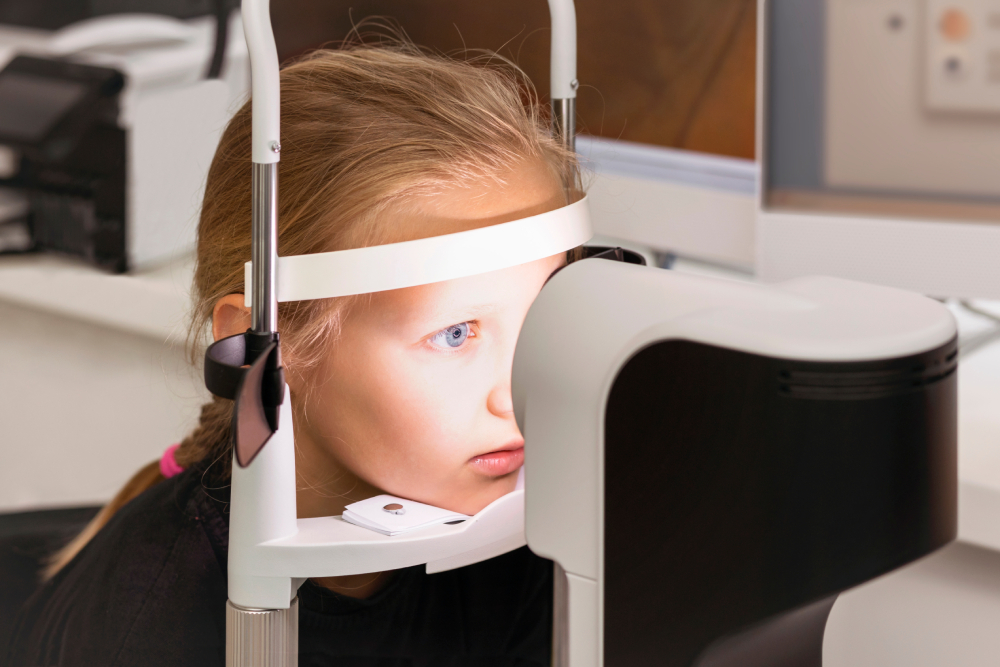
A young girl undergoes an eye examination, looking into a medical device at an optometrist's office.
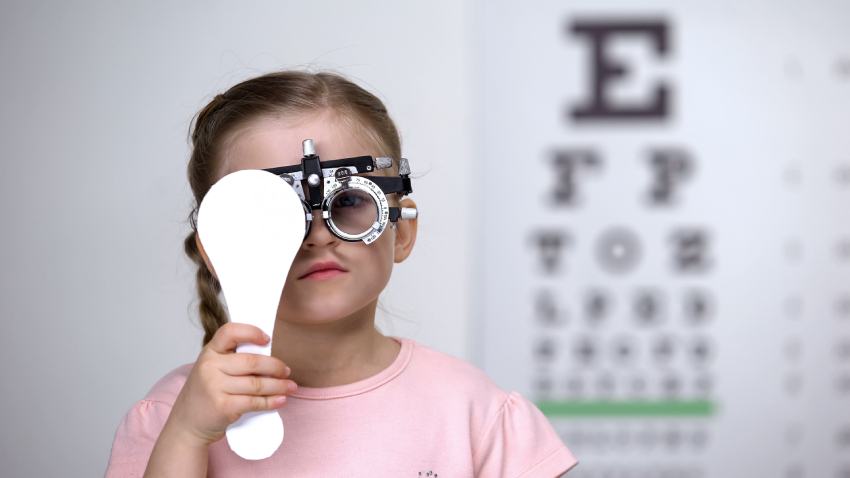
A young girl wears trial frames and covers one eye with a paddle during a vision test, with a blurred eye chart in the background.

Signs of Vision Problems in Children

Children may not recognize or communicate vision issues. Common signs include:

  • Squinting or sitting very close to screens

  • Head tilting or covering one eye

  • Frequent headaches or eye rubbing

  • Poor hand-eye coordination

If you notice these behaviors, a pediatric eye exam is recommended.

Common Pediatric Eye Conditions

Amblyopia (Lazy Eye)

Occurs when one eye does not develop normal vision. Early treatment may include patching, atropine drops, or vision therapy.

Strabismus (Crossed Eyes)

Eye misalignment that affects depth perception and comfort. Treatment may involve glasses, therapy, or referral for surgery.

Early diagnosis improves long-term outcomes.
A young girl undergoes an eye examination, looking into a medical device at an optometrist's office.
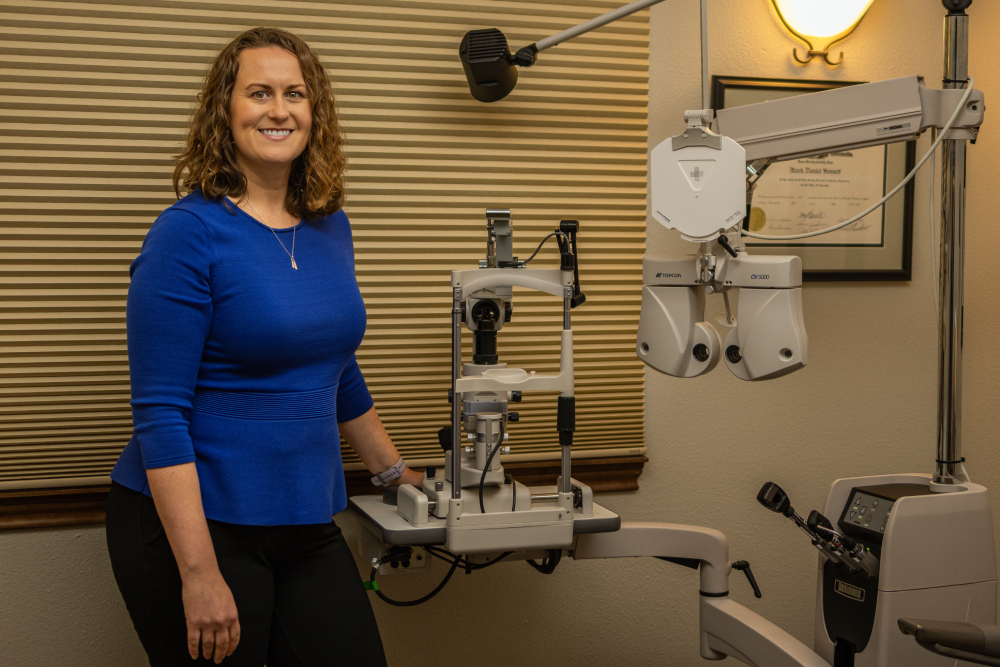
A woman stands next to ophthalmology examination equipment in a well-lit office, with framed certificates on the wall behind her.

What to Expect During a Pediatric Eye Exam

Pediatric exams are gentle, age-appropriate, and engaging.

  • Infants: Eye tracking and alignment observation

  • Toddlers: Picture-based vision testing

  • School-age children: Visual acuity, depth perception, and focusing tests

Doctors use child-friendly tools and involve parents throughout the visit.

Pediatric Vision Treatment Options

Each child receives a personalized care plan, which may include:

  • Eyeglasses designed for comfort and durability

  • Contact lenses for older children and teens

  • Amblyopia and strabismus treatment

  • Myopia management using Ortho-K, low-dose atropine, or specialty contact lenses

Ongoing monitoring ensures treatments remain effective as your child grows.

Why Choose a Pediatric Eye Doctor in Northgate?

Local pediatric eye care offers:

  • Convenient access and continuity of care

  • Expertise in childhood vision development

  • A welcoming, family-focused environment

At Spectrum Eye Care, children receive compassionate, evidence-based care designed to support lifelong visual health.
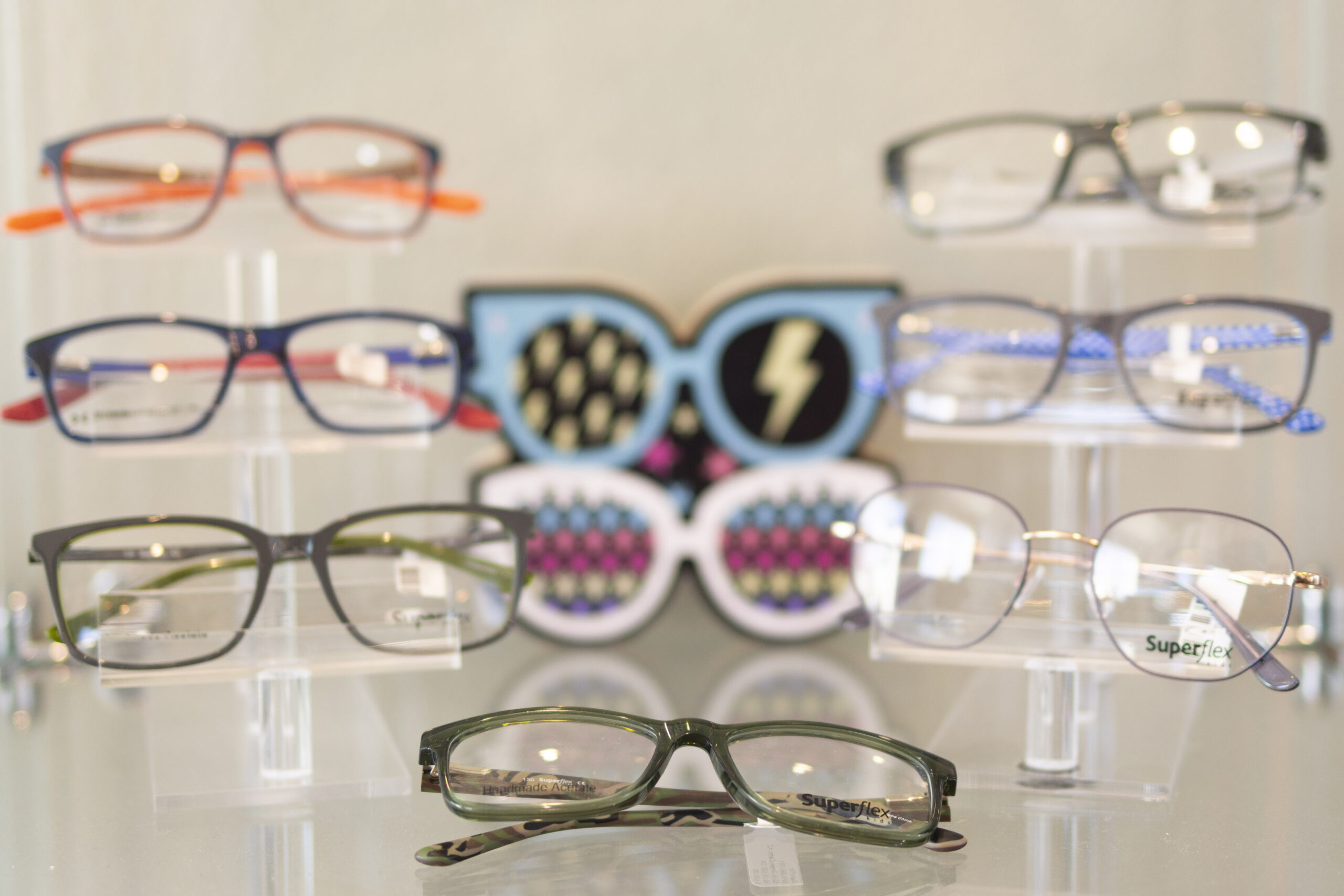
A display of eight pairs of eyeglasses on clear stands, with a decorative graphic of sunglasses and lightning bolt in the background.
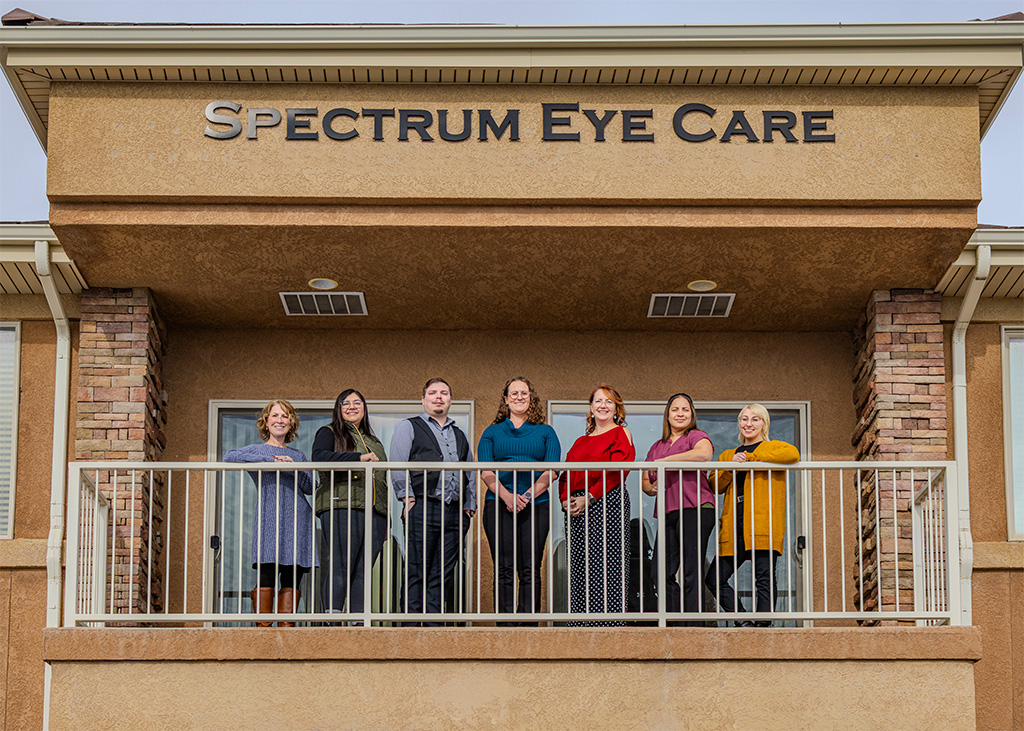
Six people stand on a balcony in front of a building with a sign that reads "Spectrum Eye Care.

Schedule a Pediatric Eye Exam Today

Many childhood vision problems develop silently. Early exams help protect learning, confidence, and long-term eye health.

Schedule your child’s pediatric eye exam in Northgate today and give them the clear vision they need to thrive—now and into the future.