

Dry Eye Treatment in Colorado Springs

Dry eye disease is a common condition that occurs when the eyes do not produce enough tears or when tears evaporate too quickly. This leads to irritation, redness, burning, light sensitivity, fluctuating vision, and ongoing discomfort that can interfere with daily life. Dry eye is often chronic and progressive without proper care. Early evaluation and targeted treatment are essential to relieve symptoms, protect the ocular surface, and preserve long-term eye health. If you experience persistent dryness, irritation, or discomfort, professional evaluation can help identify the cause and provide effective relief.

Call or schedule an appointment today to begin personalized dry eye treatment.
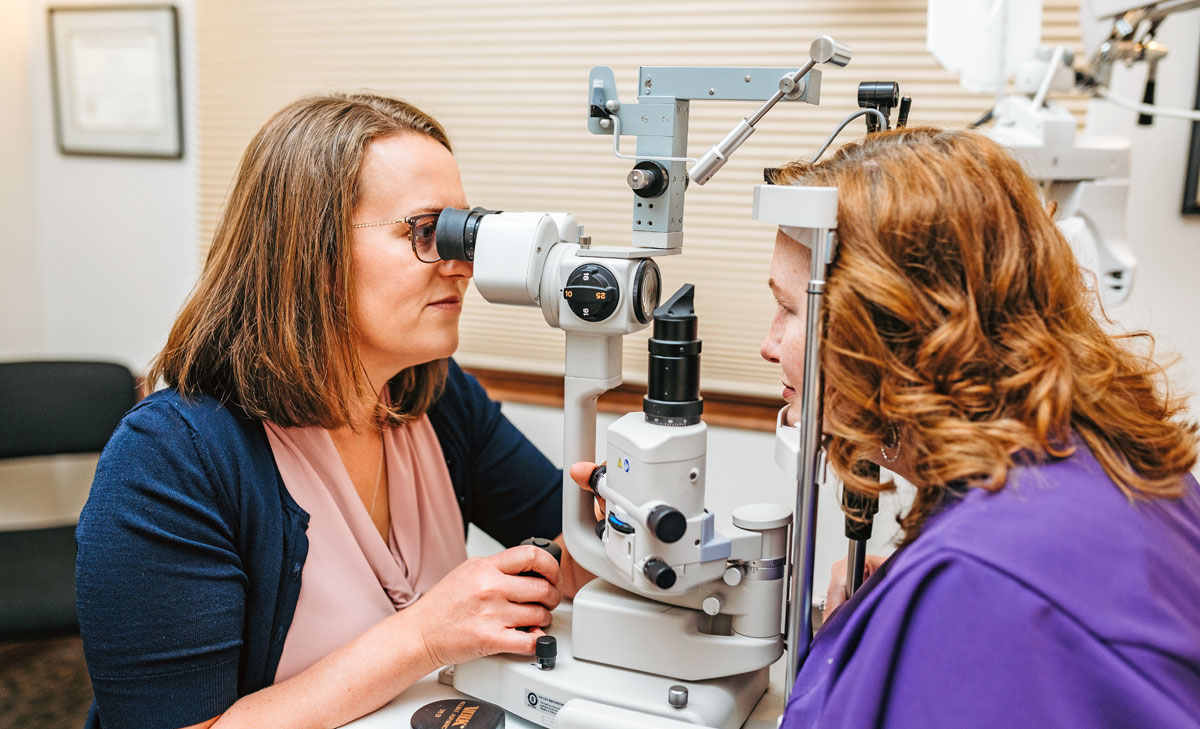
Two women sit facing each other as one conducts an eye examination using a slit lamp instrument in a clinical setting.

Understanding Dry Eye Disease

A healthy tear film has three layers—oil, water, and mucus—that work together to lubricate and protect the eye. Dry eye disease develops when one or more of these layers is disrupted.

There are two primary forms of dry eye:

  • Insufficient tear production, often related to aging, autoimmune conditions, or medications

  • Evaporative dry eye, caused by poor tear quality and rapid evaporation

Evaporative dry eye accounts for the majority of cases and is most commonly linked to Meibomian Gland Dysfunction (MGD).

Common Causes and Risk Factors

Dry eye may be caused or worsened by:

  • Meibomian Gland Dysfunction (MGD)

  • Blepharitis (eyelid inflammation)

  • Autoimmune conditions such as Sjögren’s syndrome

  • Prolonged digital screen use

  • Contact lens wear

  • Environmental factors such as dry air or wind

  • Systemic conditions including diabetes or thyroid disease

Identifying the underlying cause is essential for effective treatment.
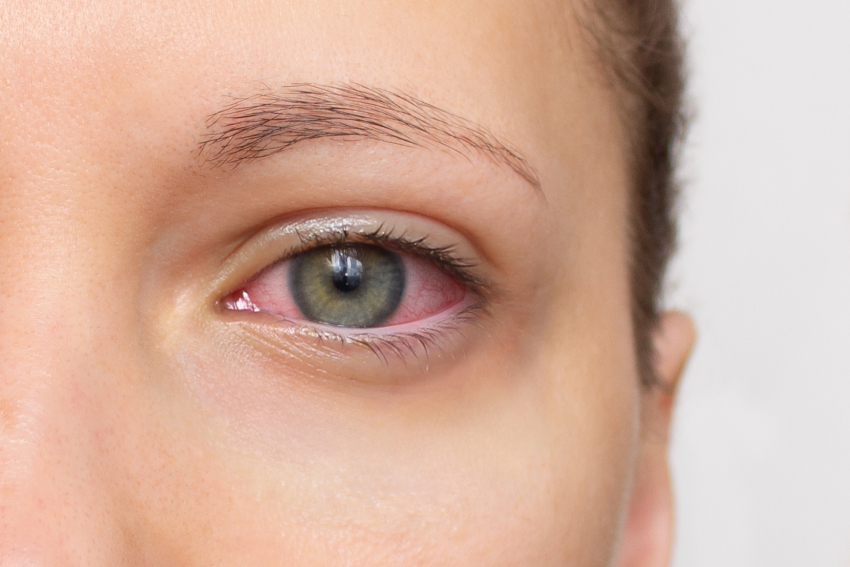
Close-up of a person's face showing one eye with visible redness and irritation in the white of the eye.
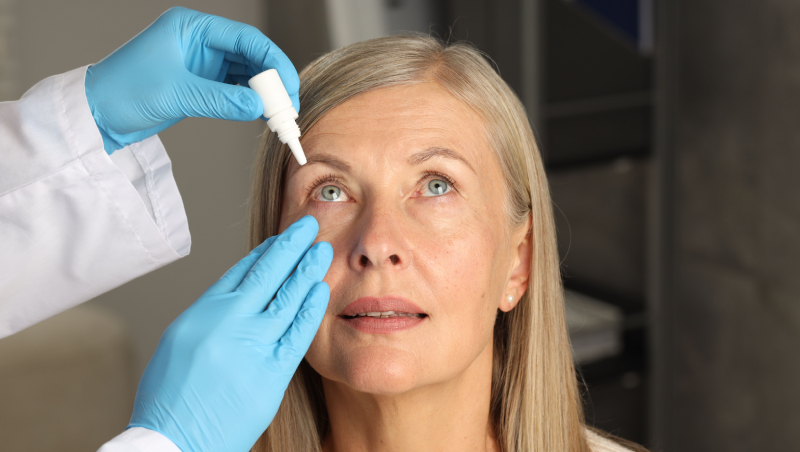
A healthcare professional in blue gloves applies eye drops to a middle-aged woman’s eye as she looks upward.

Symptoms of Dry Eye

Common symptoms include:

  • Dryness, burning, or stinging

  • Itching or gritty sensation

  • Redness and inflammation

  • Light sensitivity

  • Blurred or fluctuating vision

  • Excessive tearing

  • Contact lens discomfort

Early diagnosis helps prevent corneal damage, infections, and chronic inflammation.

Dry Eye Evaluation and Diagnosis

A comprehensive dry eye evaluation may include:

  • Medical and lifestyle history review

  • Tear production and tear film testing

  • Eyelid and meibomian gland assessment

  • Evaluation for inflammation or ocular surface damage

This thorough approach allows treatment to be tailored to your specific type of dry eye.
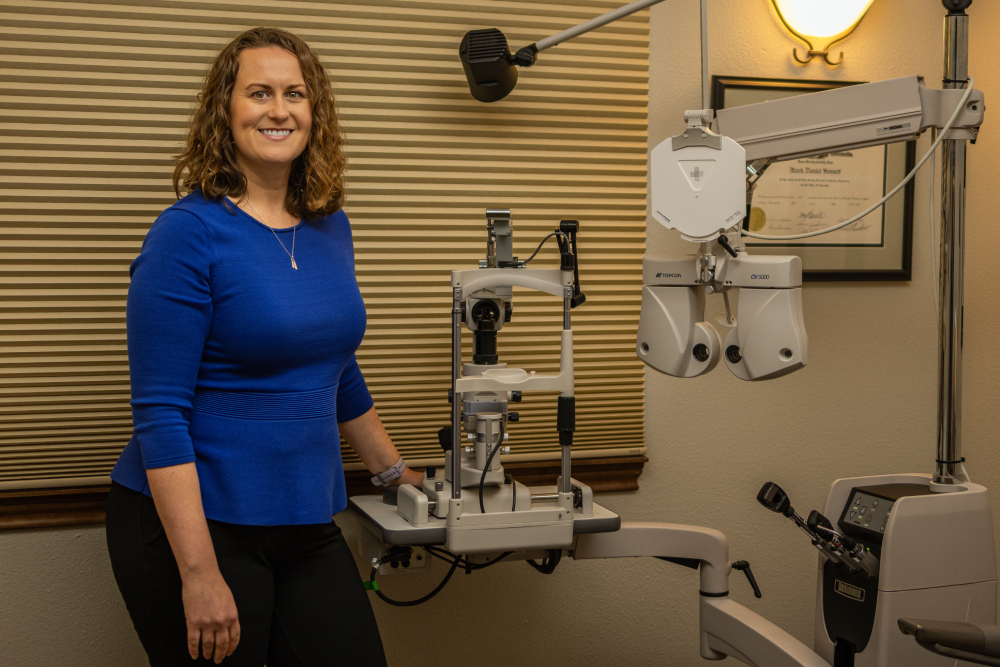
A woman stands next to ophthalmology examination equipment in a well-lit office, with framed certificates on the wall behind her.
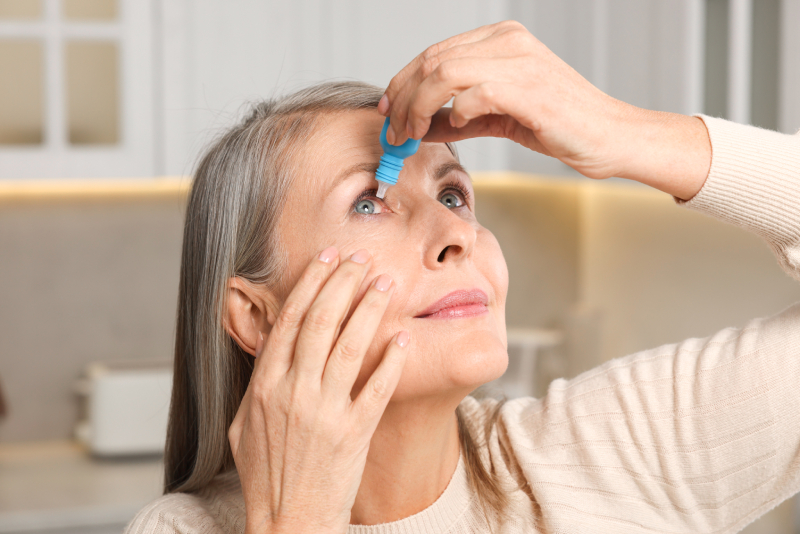
Older woman with gray hair applies eye drops to her right eye in a modern kitchen setting.

Dry Eye Treatment Options

Treatment plans are customized and may include:

  • Artificial tears and lubricating eye drops

  • Prescription anti-inflammatory medications

  • Lipid-based drops for evaporative dry eye

  • Punctal plugs to help retain natural tears

  • Eyelid hygiene and warm compress therapy

  • Nutritional support, including omega-3 supplementation

Managing dry eye often requires addressing both symptoms and underlying causes.

Managing Dry Eye Related to Systemic Conditions

Dry eye may be linked to broader health conditions such as autoimmune disease, diabetes, or thyroid disorders. In these cases, coordinated care and ongoing monitoring are important for long-term relief and eye health.

Preventive Care and Lifestyle Support

Simple daily habits can help reduce dry eye symptoms, including:

  • Taking regular breaks from screens

  • Staying well hydrated

  • Using humidifiers in dry environments

  • Avoiding smoke exposure

  • Supporting eye health with proper nutrition

Your eye doctor can provide personalized recommendations based on your lifestyle.

An eye doctor smiles while explaining results to a patient wearing diagnostic eye testing equipment during an eye exam.
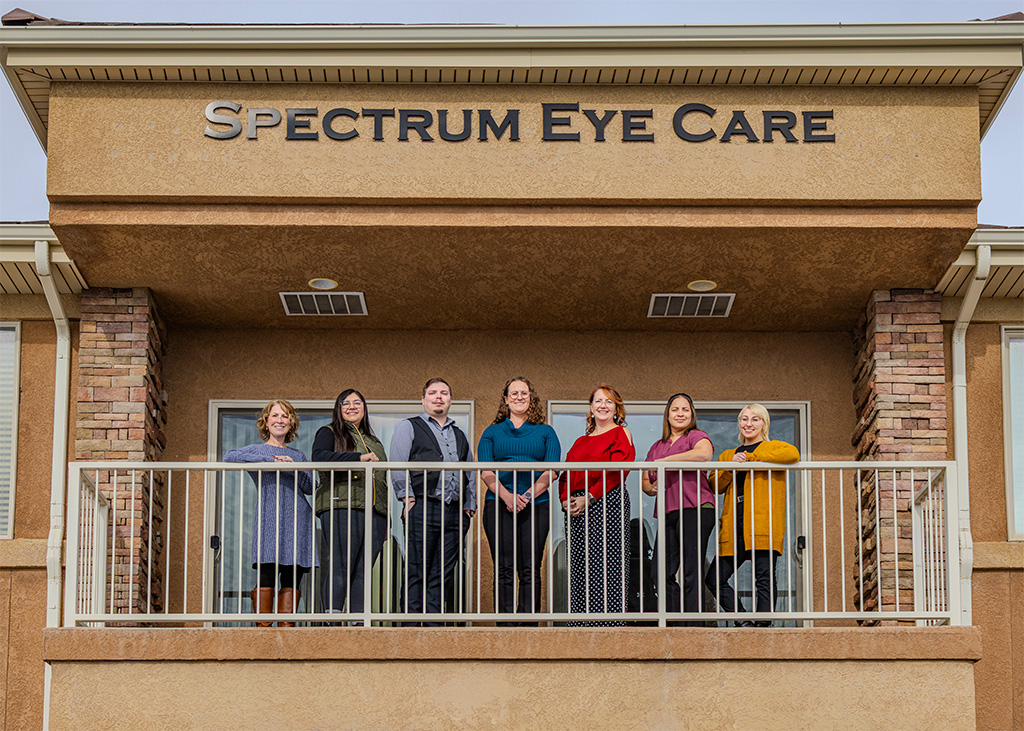
Six people stand on a balcony in front of a building with a sign that reads "Spectrum Eye Care.

Professional Dry Eye Care at Spectrum Eye Care

Spectrum Eye Care provides comprehensive dry eye treatment in Colorado Springs using advanced diagnostic tools and personalized care plans. Our goal is not just symptom relief, but long-term management and improved quality of life.

If dry eyes are affecting your comfort or vision, schedule a dry eye evaluation today.