


Contact lenses should feel comfortable enough that you barely notice them. When that changes, pay attention. Some contact lens problems come from dryness or wearing lenses too long, while others can signal an infection or another eye problem that needs professional care.
How you handle your lenses, whether they come into contact with water, how long you wear them, and how quickly you respond to symptoms can all affect your eye health.
Mild dryness late in the day is different from sudden pain, marked redness, discharge, light sensitivity, or a noticeable change in vision. Knowing the difference can help you decide when to remove your lenses and when to have your eyes checked.
Contact Lens Infection Symptoms You Should Not Ignore
Contact lenses sit directly on the eye, which makes clean handling and sensible wearing habits important. Poor hygiene, water exposure, sleeping in lenses, and wearing them longer than recommended can increase the chance of complications.
An infection involving the cornea, the clear front surface of the eye, can become serious. Significant pain or redness should not be treated as a normal part of wearing contacts. The warning signs below provide a useful reference for when lens wear should stop and professional advice may be needed.
Redness, Pain, Discharge, and Light Sensitivity
Contact lens infection symptoms can vary, but the main warning signs to watch for are:
- Significant or increasing eye pain
- Marked or worsening redness
- Unusual discharge from the eye
- New or increased sensitivity to light
- Blurry or suddenly reduced vision
- Swelling or a noticeable change in how the eye looks or feels
If one or more of these symptoms appear, remove the contact lens and leave it out while you seek treatment options. Do not put the lens back in while the eye is painful, very red, or otherwise concerning.
Mild lens awareness is different from symptoms that are getting stronger. If your eye becomes increasingly uncomfortable over several hours, treat that change seriously even if the lens initially felt fine.
When Blurry Vision Needs Prompt Attention
Blurry vision can have a simple cause. A lens may be dirty, dry, damaged, inside out, or sitting poorly on the eye. Dryness can also make vision fluctuate.
Blur that continues after you remove the lens deserves more attention, especially when it occurs alongside one or more of the warning signs listed above.
Avoid repeatedly cleaning and reinserting a lens to see whether sudden blurry vision improves. Leave it out and have the eye checked if the change continues.
Patients who develop an urgent eye problem can learn about emergency eye care in Colorado Springs and contact Spectrum Eye Care for guidance.
Contact Lens Hygiene That Protects Your Eyes
Good contact lens hygiene comes down to habits you repeat every day. Shortcuts can introduce microorganisms to a lens that will then sit against your eye for hours.
Follow the cleaning, storage, wearing, and replacement instructions for your specific lenses. Care requirements can differ between lens types and systems, so the routine for one lens type may not suit another.
Clean Hands, Fresh Solution, and a Clean Case
Wash your hands with soap and water before touching your contacts. Dry them thoroughly with a clean, lint-free towel before handling a lens or touching your eye.
Reusable lenses require a specific care system. Use fresh disinfecting solution whenever you store your lenses; do not add new solution to liquid already in the case.
Empty used solution from the case after inserting your lenses and follow the doctor’s instructions for cleaning and replacing the case. A case can become contaminated even when it looks clean.
Never use saliva to wet or clean a contact lens. Use the contact lens product designed for your lenses when a lens needs to be rinsed or disinfected.
Why Water and Contact Lenses Do Not Mix
Tap water may be safe to drink, but it is not sterile. It can contain microorganisms that should not be trapped between a contact lens and the eye.
Keep contacts away from tap water, swimming pools, lakes, rivers, hot tubs, and shower water. Swimming or showering in lenses can expose your eyes to organisms found in water, including Acanthamoeba, which can cause a rare but potentially severe corneal infection.
If your contacts are accidentally exposed to water, follow the care instructions for your lens type. If you later notice any of the warning signs listed in the infection section, leave the lenses out and contact an eye care professional.
How Replacement Schedules Reduce Risk
Contact lenses are designed around specific replacement schedules. Daily disposable lenses are discarded after use, while other soft lenses may be replaced according to a schedule prescribed by your eye doctor.
Extending that schedule can affect both comfort and eye health. Deposits from the tear film accumulate with wear, and the condition of a lens can change even when it still looks normal.
If your eyes regularly become irritated before the end of the day or you struggle with your current replacement routine, mention it at your next exam. Your symptoms may involve wearing habits, the eye surface, lens material, fit, or several factors together.
A replacement schedule is part of the lens-care plan designed around the material and type of lens you use.
Spectrum Eye Care provides contact lens exams in Colorado Springs to evaluate prescription, lens fit, vision, and eye health.
Dry Eyes From Contact Lenses
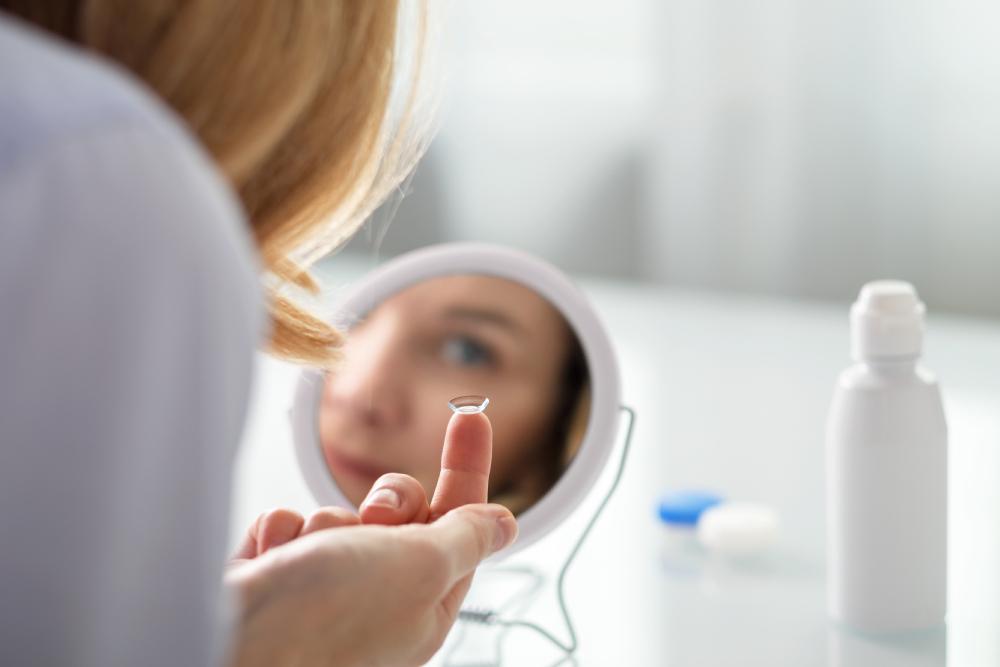
Contact lenses interact with your tear film every time you blink. If the tear film does not keep the eye adequately lubricated, lenses can begin to feel dry, gritty, or uncomfortable.
Some people notice dry eyes from contact lenses mainly toward the end of the day. Others experience burning, stinging, fluctuating vision, or a sensation that the lens is sticking to the eye. Screen use, heating, air conditioning, wind, and low humidity can make symptoms more noticeable.
Repeated discomfort deserves attention. Removing your lenses earlier may help temporarily, but it does not explain why your tolerance has changed. Looking at the underlying cause can help determine whether a change in lens wear, lens material, or eye care is needed.
How Tear Film Quality Affects Lens Comfort
A healthy tear film coats and protects the surface of the eye while supporting clear vision. When tears evaporate too quickly or become unstable, the contact lens may no longer stay evenly lubricated.
One clue is vision that clears after blinking and then becomes blurry again. Another is a lens that feels comfortable in the morning but becomes increasingly noticeable as the day continues.
Screen use can contribute because people may blink less completely or frequently while concentrating. Ongoing dryness should be examined rather than managed indefinitely by trying different eye drops.
Your eye doctor can consider the condition of the eye surface, your wearing schedule, lens material, and other factors that may be affecting comfort.
When Daily Disposable or Moisture-Retaining Lenses May Help
Lens material, design, replacement schedule, and eye health can all influence comfort. Some patients may benefit from daily disposable lenses or a different lens material when dryness keeps returning.
Daily disposables provide a fresh pair each day and remove the need for overnight cleaning and storage. They do not, however, automatically solve every case of contact lens-related dryness.
The same applies to lenses designed to retain moisture. Your prescription, corneal shape, tear film, wearing schedule, and eye health all matter when choosing a lens that suits your eyes.
Patients considering another lens type can read more about contact lenses in Colorado Springs.
Why Dry Eye Treatment May Be Needed Before Refitting Lenses
Sometimes the lens is only part of the problem. If the surface of the eye is already dry or irritated, switching contacts may not restore comfortable wear.
An eye doctor can examine the eye surface and tear film for signs that help explain the symptoms. Depending on those findings, dry eye treatment may be recommended before or alongside changing the contact lens.
Treating the underlying surface problem can make it easier to assess how well a new lens performs. It also avoids assuming that every episode of discomfort is caused by the contact lens itself.
If burning, grittiness, fluctuating vision, or reduced contact lens tolerance has become routine, learn more about dry eye treatment in Colorado Springs.
Can You Sleep in Contact Lenses Safely?
For most contact lens wearers, taking lenses out before bed should be part of the nightly routine. Falling asleep in them may seem harmless, particularly if you have done it before without a problem, but overnight wear can increase the risk of complications.
So, can you sleep in contact lenses? Some lenses are specifically prescribed for overnight or extended wear. That does not mean sleeping in contacts is suitable for everyone.
If your lenses were not prescribed for overnight wear, remove them before sleeping, including before a nap.
Why Overnight Wear Raises the Risk of Infection
The cornea receives oxygen from its environment. A contact lens creates a barrier between the cornea and the air, while closing your eyelids during sleep changes conditions at the eye’s surface further.
Sleeping in contacts can also increase the chance of inflammation or infection. Having slept in your lenses previously without symptoms does not mean future overnight wear carries no risk.
Follow the wearing schedule prescribed by your eye doctor and do not use comfort alone as a measure of whether overnight wear is safe. A lens can still feel acceptable after it has been worn longer than it should be.
What to Do if You Accidentally Sleep in Your Lenses
If you wake up wearing contacts that should have been removed, avoid pulling them off immediately if they feel dry or stuck. Blink normally and give your eyes a chance to rehydrate.
Once the lenses move freely, remove them comfortably. Follow the disposal or cleaning instructions for your lens type and give your eyes some time without contacts.
If any warning signs from the infection section develop or continue after the lenses are out, contact an eye care professional. Use your glasses while you are waiting for clarification from your doctor.
Signs of Contact Lens Overwear
Contact lens overwear can mean using a pair beyond its replacement date, but it can also mean wearing lenses for longer each day than your eyes comfortably tolerate.
Repeatedly pushing past discomfort can lead to a pattern of redness and irritation. Changes in how long you can comfortably wear your contacts are worth noticing.
Overwear does not always appear as a dramatic problem. You may first notice that your lenses become bothersome earlier in the day, that your eyes feel tired after removal, or that glasses feel more comfortable on some days.
Reduced Wearing Time, Redness, and Persistent Irritation
Maybe your lenses used to stay comfortable until evening, but now you want them out by mid-afternoon. Your eyes may look red after removal or remain irritated once the contacts are gone.
Reduced comfortable wearing time can be associated with dry eye, deposits on reusable lenses, lens fit, or changes to the eye’s surface.
Look for patterns. If irritation consistently starts after a specific number of hours, appears during particular activities, or improves on days when you wear glasses, tell your eye doctor. If the symptoms match the warning signs discussed earlier, seek treatment sooner.
Why Pushing Through Discomfort Can Make the Problem Worse
When your contacts start to feel uncomfortable, take them out. Don’t wait to see how much longer you can put up with them.
Continuing to wear a lens on an irritated eye can prolong symptoms and make it harder to distinguish ordinary dryness from a developing problem.
Keep current prescription glasses available so you have another option when your eyes need a break. If irritation returns whenever you resume lens wear, schedule an examination instead of repeating the same cycle.
When to Stop Wearing Contact Lenses
Knowing when to stop wearing contact lenses matters because discomfort can have several causes. A dry or damaged lens, infection, inflammation, and problems affecting the eye surface can initially produce similar symptoms.
If something suddenly feels wrong, take the lens out right away, even if you were hoping to finish the day in it. The warning-sign list in the infection section can help you decide when professional intervention may be needed.
Symptoms That Require Lens Removal and Professional Advice
Remove your contacts if you develop any of the significant warning signs described earlier, including substantial pain, marked redness, unusual discharge, light sensitivity, swelling, or a sudden change in vision.
Do not repeatedly put a lens back into an irritated eye. Once it is out, give the eye a break and follow the instructions from your eye care professional.
Problems can also affect only one eye. You do not need symptoms in both eyes before seeking medical attention. A one-sided change can still be important, especially when it develops suddenly.
When Same-Day Eye Care May Be Appropriate
Symptoms that come on suddenly, get worse, or affect your vision shouldn’t wait for your next routine appointment. Call to be seen promptly.
If your symptoms began after swimming, showering, using a hot tub, or rinsing a lens or case with water, be sure to tell your eye doctor right away.
If you are uncertain about the urgency, call the office and describe the symptoms, when they started, which eye is affected, and whether removing the lens helped.
Spectrum Eye Care offers emergency eye care in Colorado Springs for eye problems that may require prompt evaluation.
When to Schedule a Contact Lens Exam
You do not need to wait until contacts become impossible to wear before talking to your eye doctor.
A contact lens exam can assess your vision, prescription, lens fit, and eye health. It is also a chance to discuss changes in comfort or vision that have developed since your previous appointment.
Even gradual changes are worth mentioning. They can provide useful clues about whether your current lenses still suit your eyes.
Persistent Discomfort, Redness, or Blurry Vision
Contact lenses should not routinely leave your eyes sore or noticeably red. Recurring blurry or unstable vision also deserves attention.
If symptoms keep returning, make an appointment instead of continually shortening your wearing time or trying different products without knowing what is causing the problem.
Tell your eye doctor when symptoms start, how long you typically wear your lenses, whether removing them helps, and whether certain environments or activities make things worse.
When Your Prescription or Lens Fit May Need to Change
Eyes and vision can change over time. A contact lens prescription that once provided clear, comfortable vision may eventually need to be adjusted.
Prescription strength is only one part of contact lens wear. Lens diameter, curvature, material, movement on the eye, and interaction with your tear film can affect performance.
If you are squinting through your contacts, experiencing frequent blur, adjusting the lenses with your fingers, or removing them much earlier than before, an evaluation can help identify what has changed.
How a Contact Lens Evaluation Can Improve Comfort and Vision
A contact lens evaluation allows your eye doctor to see how the lenses sit and move on your eyes. The exam can help determine whether the prescription and fit remain suitable and whether the eye surface is healthy enough for comfortable wear.
If dryness is contributing to your symptoms, addressing the dry eye may be more useful than simply changing lenses. When the current material or design is part of the problem, other options can be considered based on the examination findings.
For more information about the process, visit Spectrum Eye Care’s page for contact lens exams in Colorado Springs.
Safer Contact Lens Wear Starts With Paying Attention
Safe contact lens wear depends on consistent habits and recognizing when your eyes need attention. Wash and dry your hands before handling lenses, follow the replacement schedule, keep contacts away from water, and avoid sleeping in them unless overnight wear has been specifically prescribed.
Recurring discomfort, redness, blurry vision, or declining lens tolerance should not become your new normal.
If contact lens problems are making your lenses uncomfortable or affecting your vision, Spectrum Eye Care can assess your eyes, current lenses, and wearing habits. Contact Spectrum Eye Care to schedule an appointment and find out what may be causing your symptoms.